Golden Thought:
The fire does not define me.
The One who walks through it with me does.
There is a difference between enduring the fire and embracing it. Enduring says, “I will survive this.” Embracing says, “I trust the One who stands with me in it.”
Years before chronic illness ever became my daily reality, I had what I can only describe as a pre-fire moment. It was the spring of 2003. I sensed clearly that following the path set before me would involve intense pain. For a brief moment, I actually felt it — a sharp, palpable weight. My heart trembled. I prayed,
“God, if this is Your best for me, then I want it. But please don’t show me more right now. My heart might fear and falter.”
Immediately, the pain lifted. And I prayed again,
“Whatever it takes. I want Your plan.”
I didn’t know then what that would mean. I only knew I trusted the One asking.
The story of the three Israelites in the furnace has always struck me for one reason:
They didn’t negotiate.
They didn’t demand rescue.
They didn’t soften their conviction.
They didn’t bow.
They said, essentially,
“Our God is able to deliver us.
But even if He does not, we will not bow.”
That line is not reckless faith. It is anchored faith. They trusted God’s character more than they trusted the outcome. That is what embracing the fire looks like.
When chronic illness became real, my prayers changed. Early on, it was,
“Use this.” Then it became, “Stay with me.” Now it has matured into something quieter, “Thank You for being with me in this. If there is relief, thank You. If there is not, thank You for being here.”
That shift did not happen overnight. It happened in the slow burn of daily reality.
Over time, something else changed in me. I stopped needing to know who lit the flame.
If God authored it, His love for me does not change.
If man caused it, His power to redeem it does not change.
If it was the enemy or randomness, His presence remains unchanged.
Jesus once said to Pilate, “You would have no authority over Me unless it had been given from above.”
That wasn’t denial of suffering. It was clarity of hierarchy.
God is above the flames. And He is also with me in them. So long as He is with me, the fire becomes His tool.
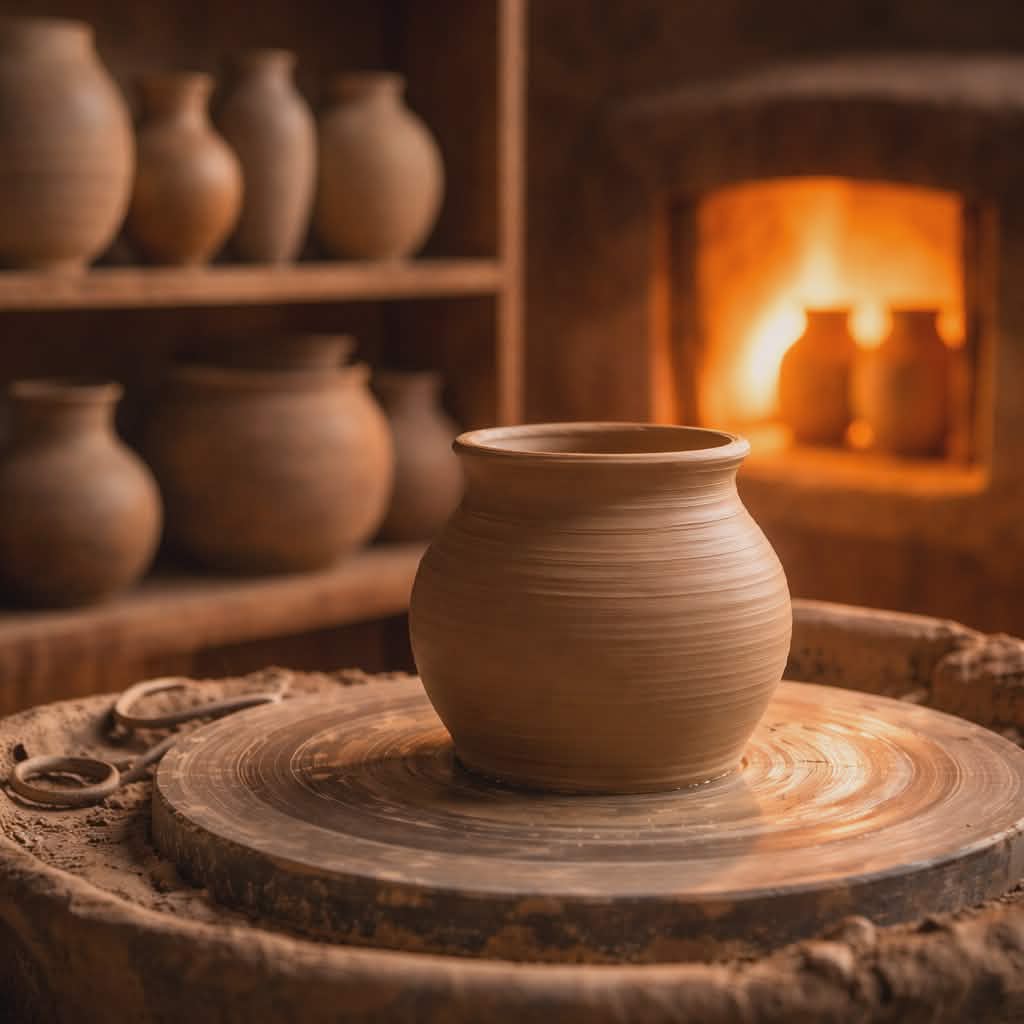
The potter knows the clay.
He knows when it needs water.
He knows when it needs shaping.
He knows when it needs heat.
Not to earn His love, but to prepare it for the fullness of its intended form.
Embracing the fire does not mean pretending it does not hurt. It means trusting the outcome before you can see it.
It means saying,
“Even if He does not, I will not bow.”
It means believing that nothing — not pain, not illness, not grief — can alter His omnipotence, His love, or His plan.
And when that settles into your bones, the flames lose their authority.
They may still burn.
But they no longer rule.
The fire does not define me.
The fire does not define me.
The One who walks through it with me does.
 Refiner's Gold
Leave a comment